As the world progresses towards a more sustainable future, legislative pressures on producers from all industries are ramping up significantly. One such piece of UK legislation which looks to tackle a significant sustainability challenge is the Extended Producer Responsibility for Packaging (or pEPR for short). First published by DEFRA and the Environment Agency back in 2022, with developments since, the legislation looks to hold producers of packaging accountable for the costs associated with the disposal of said packaging.
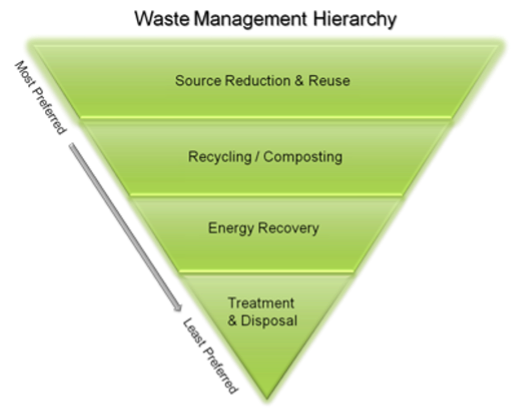
The Waste Management Hierarchy
Looking at the Waste Management Hierarchy, pictured below, the reduction of waste at source remains as the most sustainable option, which is no different when it comes to packaging. By aiming this legislation towards producers, therefore, the onus is on them to switch to more sustainable alternatives, either through minimising unnecessary packaging or switching to more sustainable materials, where appropriate.
Encouraging Life Cycle Thinking in Business Practices
The introduction of this legislation aims to implement a level of life cycle thinking for companies, by encouraging the consideration of products from “cradle-to-grave”. Sustainability is, and will continue to be, a huge focus for all of us here at the Chemical Business Association, with regular Carbon Literacy training (licensed by The Carbon Literacy Trust) extending and dispelling concepts such as environmental sustainability, life cycle thinking, and carbon footprinting to member companies and beyond.
Overview of pEPR Regulations and Compliance Requirements
pEPR is aimed at any business which is responsible for the production and/or importing (and redistribution) of packaged goods. For the full list of packaging activities under the pEPR regulations, please see the gov.uk website here. Your company will need to take action if:
- You have an annual turnover of £1m or more
- You were responsible for the production or importing of over 25 tonnes of packaging
- You undertake what the government refer to as “packaging activities”
Impacts of pEPR on the Chemical Industry
Charges will be scaled based on quantity of packaging, as well as materials. The proposed charges are on target for publication by April 2025, with the first wave of charges due October 2025. The charges associated with each material are scaled based on its ease of disposal or recyclability and are planned to be altered periodically based on trends in material availability and impact. Within existing pEPR regulations around the world (and particularly the EU), incentives are also offered to companies which make the switch to more sustainable materials. Under current plans, charges only apply to what is classified as household waste, implying packaging directly by consumers. However, reporting of all packaging types is still required, even if they do not result in a charge.
Sustainable Packaging Materials and Reuse
For chemical companies, the introduction of pEPR charges has several potential impacts, the scale of which proportional to the business operations undertaken. With this increased responsibility across the product’s entire life cycle, including the eventual disposal of packaging, producers will be inclined to consider sustainable options when it comes to all stages of product packaging, from the packaging of the product itself to the secondary packaging of those products, to the tertiary packaging of those, and so on. This will include the use of recyclable plastics, such as PET and HDPE, or the switch to biodegradable materials, such as recycled cardboard and paper for secondary and tertiary packaging.
The options for sustainable packaging also extend beyond recyclable options. Again, referring to the Waste Management Hierarchy, the reuse of packaging also provides a sustainable alternative to single use materials, particularly with bulk materials.
Developing New Reporting Systems for Compliance
Practically speaking, the development of new management systems to monitor the quantity and materials of packaging will be required in order to track and declare the required data. These reporting systems will require the packaging activity, type, class, material and weight. Failure to declare could well result in penalties for non-compliance, including potential warnings/notices, reputational damage, fines, prosecutions or even withdrawal from market.
To learn more about how we as an association have helped the industry prepare for the implementation of pEPR, as well as other climate related disclosures, feel free to get in touch via cba@chemical.org.uk, or visit our website at www.chemical.org.uk.