Hibiscus is pleased to introduce Ertan Atbaş as a guest blog contributor. Ertan has extensive expertise in dangerous goods compliance and the air transport of infectious substances, with a strong focus on adherence to IATA Dangerous Goods Regulations..
In this article, he provides a detailed overview of the regulatory requirements governing the shipment of infectious substances by air, including classification under Category A and B, packaging instruction compliance, labelling obligations, and documentation standards. Drawing on current regulatory guidance and industry practice, Ertan outlines the key controls required to ensure safe and compliant transport within complex international supply chains, while also addressing common compliance challenges and mitigation strategies.
Infectious Substances in Air Transport – Classification, Definitions & Categories
The air transport of infectious substances is a highly regulated domain under international agreements like the ICAO Technical Instructions and IATA Dangerous Goods Regulations (IATA DGR). These regulations aim to ensure that public health and aviation safety are not compromised. In this post, we dive into how infectious substances are defined, classified, and categorized for air transport.
🧬 What is an Infectious Substance?
According to the IATA DGR, infectious substances are substances known or reasonably expected to contain pathogens. These are defined as microorganisms (e.g., bacteria, viruses, rickettsiae, parasites, fungi) or other agents such as prions that can cause disease in humans or animals (Ref: DGR 3.6.2, Classification of Infectious Substances).
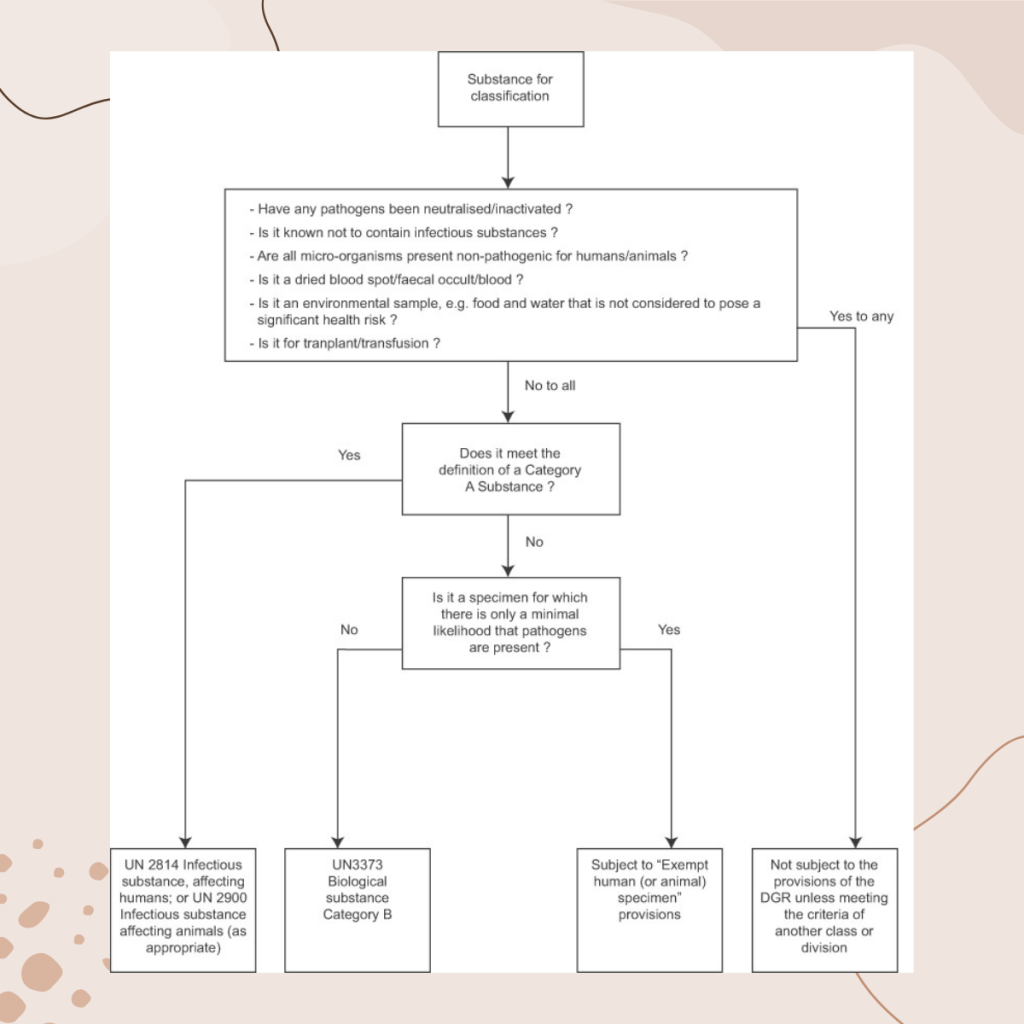
🧪 Classification: Class 6.2 – Infectious Substances
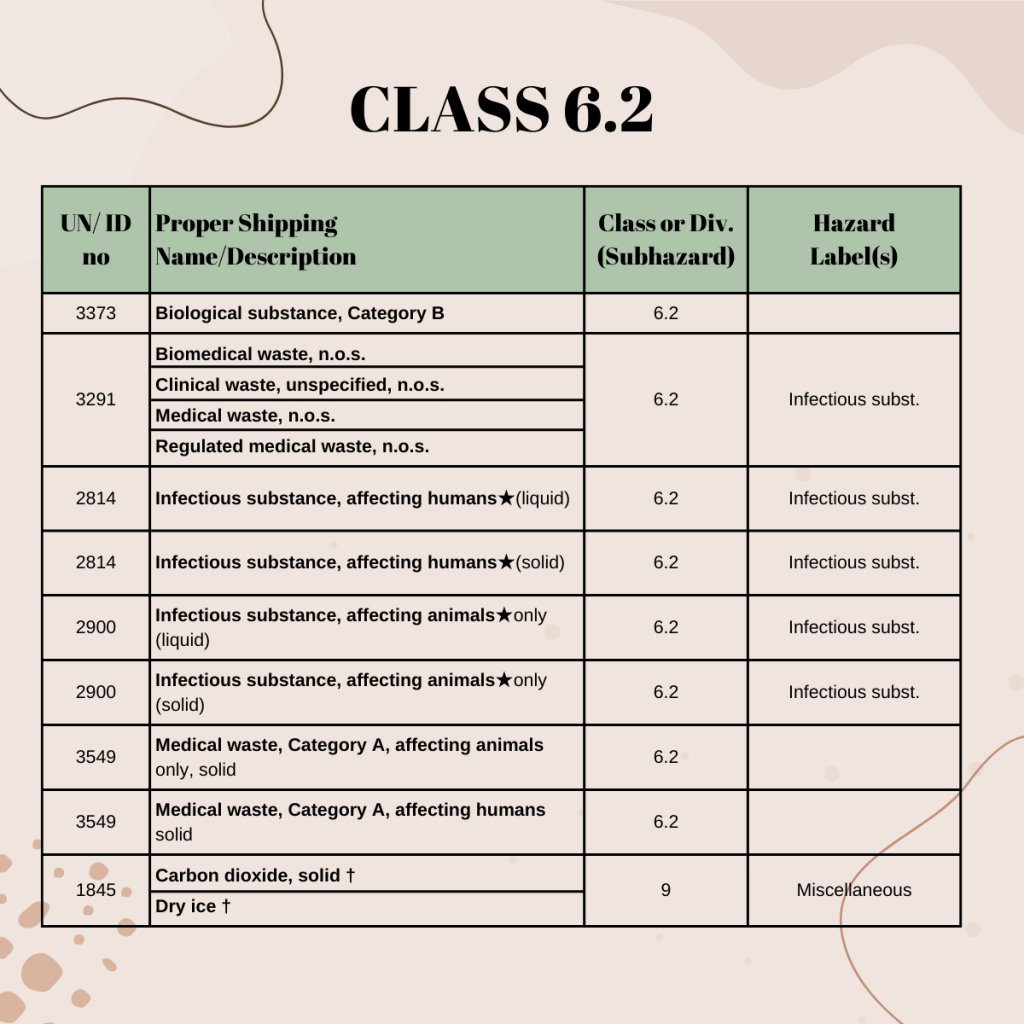
Infectious substances fall under Class 6.2 and are assigned to one of the following UN numbers, depending on their specific nature:
- UN 2814 – Infectious substances affecting humans
- UN 2900 – Infectious substances affecting animals only
- UN 3373 – Biological substance, Category B
- UN 3291 – Clinical waste, unspecified, potentially infectious
- UN 3549 – Medical waste, Category A (air transport prohibited except under special provisions A2, A218)Infectious Substances
📦 Categories: Category A vs. Category B
Category A: Infectious substances that are capable of causing permanent disability, life-threatening or fatal disease in otherwise healthy humans or animals. These must be assigned to:
UN 2814 (human) or UN 2900 (animal).
Packaging must follow stringent triple-packaging requirements, and a shipper’s declaration is required.
Category B: Infectious substances not meeting the criteria for Category A. These are assigned to:
UN 3373, and must be marked as “BIOLOGICAL SUBSTANCE, CATEGORY B”
For Category B, no dangerous goods declaration is needed, but the airway bill must indicate the nature of the contents.
📌 Reminder: UN 3549 is prohibited for air transport unless exempted by special provisions (Ref: IATA DGR SP A2, A218; ICAO TI 1;2.1.3).
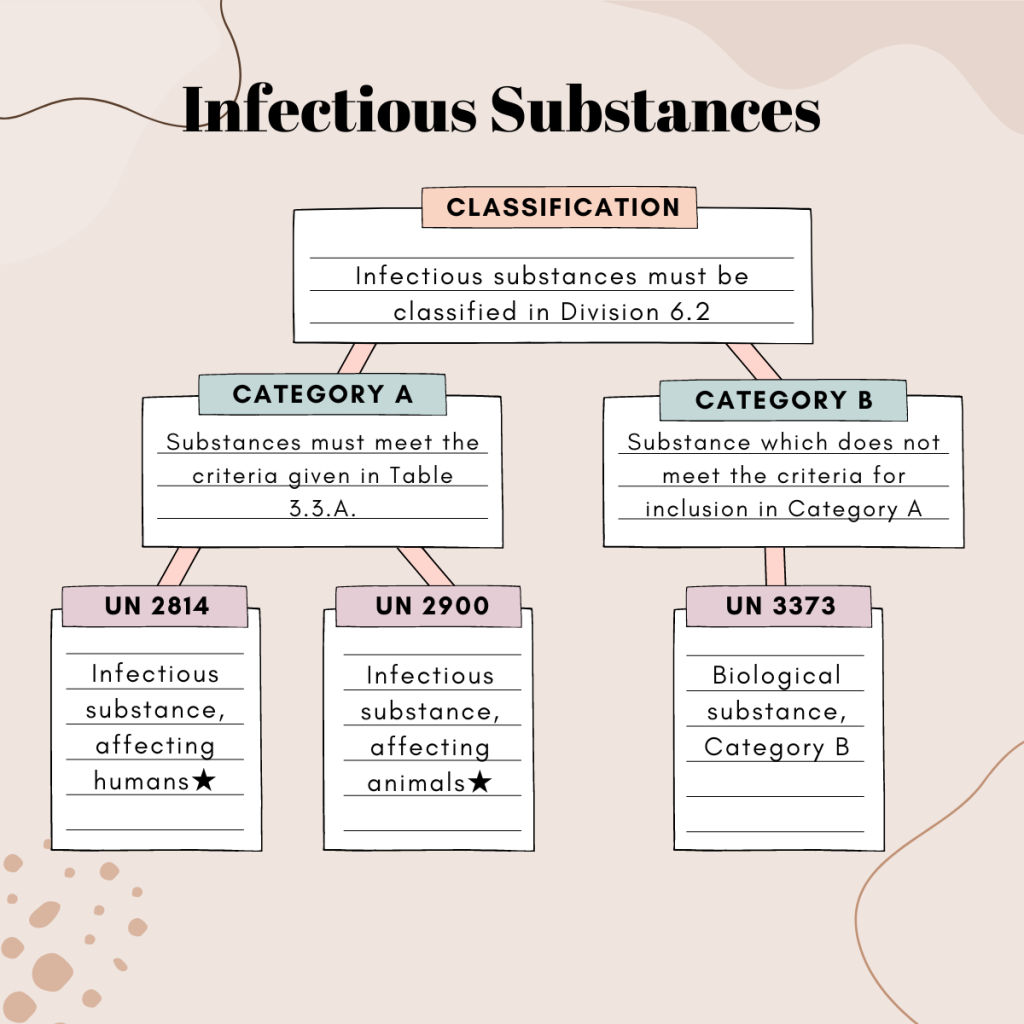
(For Category A Ref: IATA DGR Table 3.6.D and ISSR 17th Edition Table 3.3.A)
📥 Packaging Requirements
For UN 2814, UN 2900, and UN 3373:
- Leakproof primary receptacle
- Leakproof secondary packaging
- Absorbent material between the two
- A rigid outer packaging
- An itemised list of contents between secondary and outer layer
- Responsible person contact (Name & Phone) must appear on the outer package for UN 2814 & UN 2900
📌 For UN 3373: Responsible person info must be either on the package or airwaybill
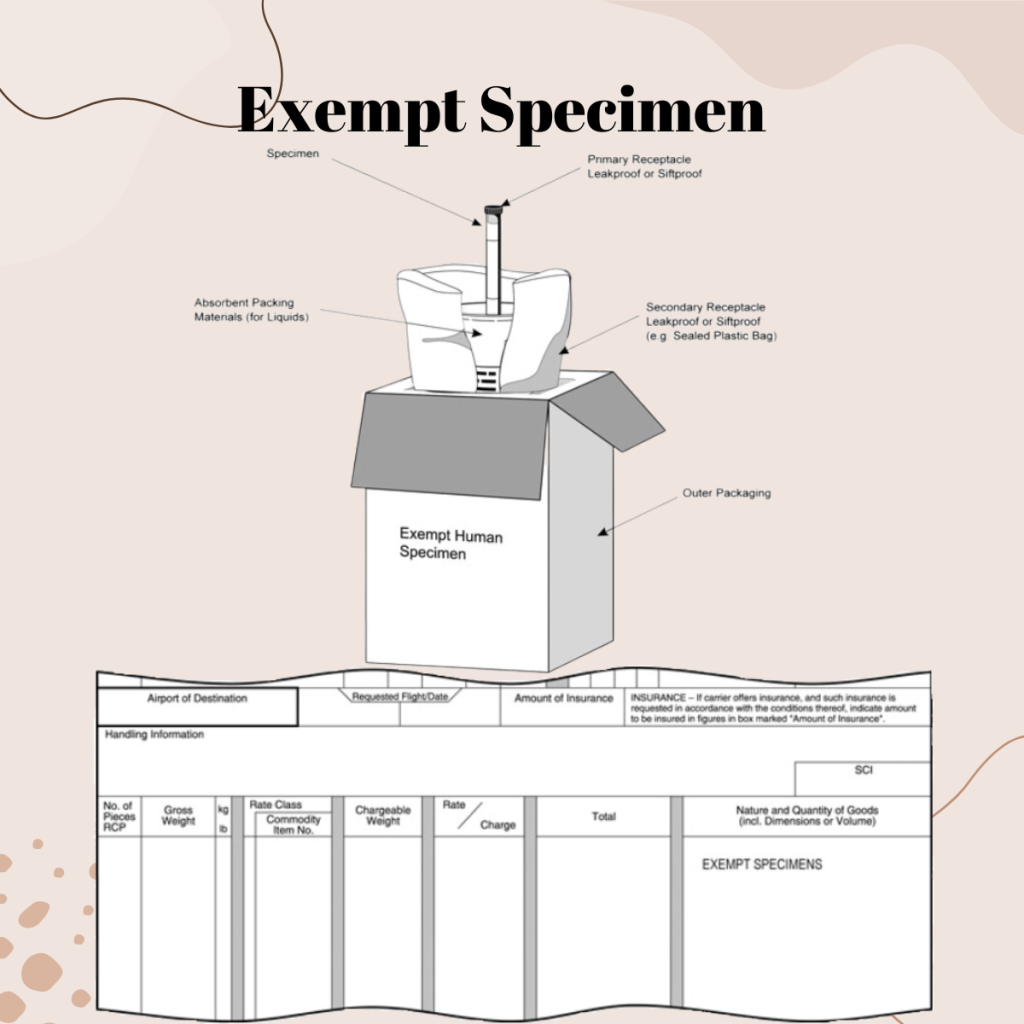
📥 Exempt Specimen
Patient specimens for which there is minimal likelihood that pathogens are present are not subject to other provisions of these Regulations provided
Transporting Category A Infectious Substances – Packaging, Labels & Documentation
Category A infectious substances represent a serious risk during transport and must follow the highest standards of packaging, labelling, and documentation as required by the IATA Dangerous Goods Regulations (IATA DGR).
☣️ What is Category A?
Category A includes infectious substances capable of causing permanent disability, life-threatening or fatal diseases in humans or animals.
Assigned UN Numbers:
UN 2814 – Infectious substance, affecting humans
UN 2900 – Infectious substance, affecting animals only
❗ These are fully regulated dangerous goods. A Shipper’s Declaration for Dangerous Goods is mandatory.
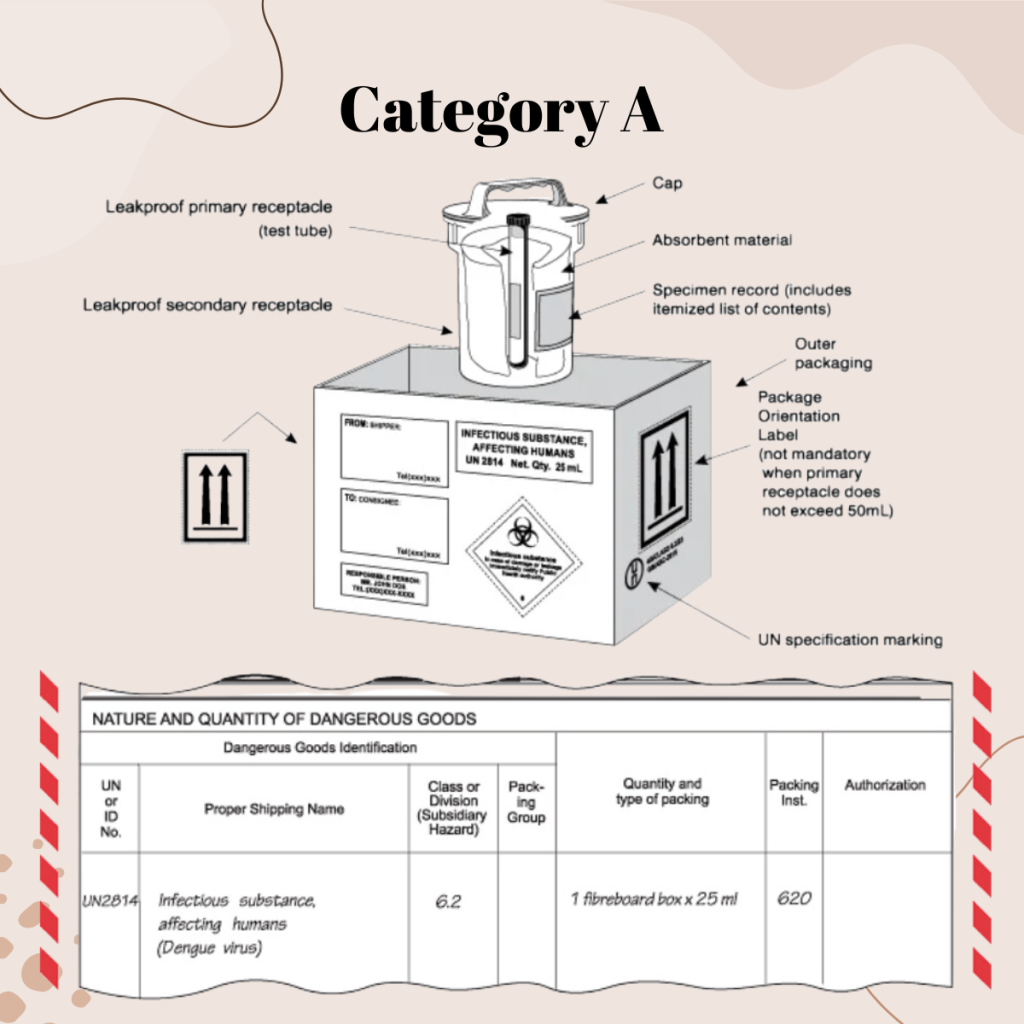
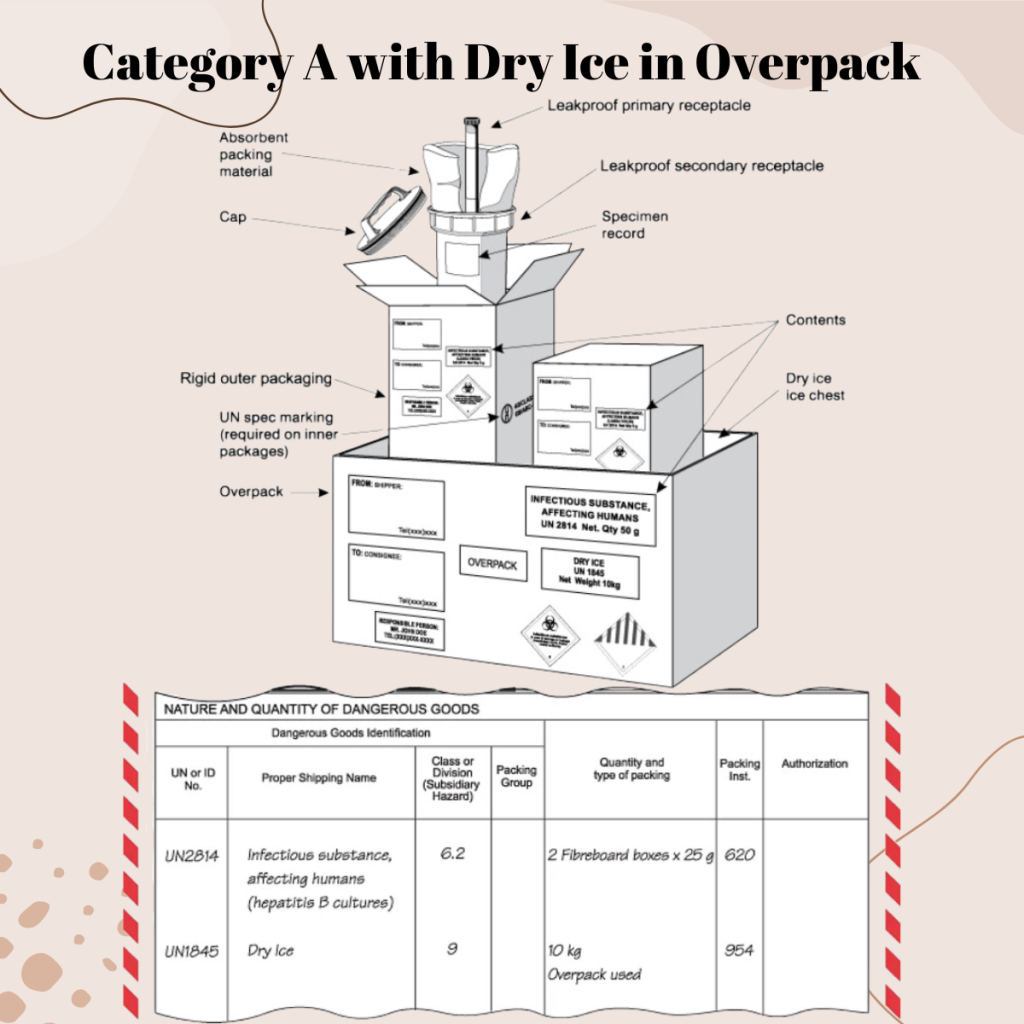
📦 Packaging: Triple Packaging System (PI 620)
IATA Packing Instruction PI 620 specifies the following elements:
- Primary receptacle – leakproof
- Secondary packaging – leakproof and contains absorbent material
- Outer packaging – rigid, tested to UN specification standards (drop, pressure, puncture resistance)
👉 Additional requirements:
- Itemised list of contents between secondary and outer packaging
- Responsible person’s name and telephone number marked on the outer package
Refer to DGR 5.0.2.11 and PI 620 in Section 5 of IATA DGR
🏷️ Labels and Markings
The outer package must include:
- Class 6.2 Infectious Substance label
- Proper shipping name & UN number (e.g., UN 2814, INFECTIOUS SUBSTANCE, AFFECTING HUMANS)
- UN specification markings (e.g., 4GU/Class 6.2/YR)
- Orientation arrows
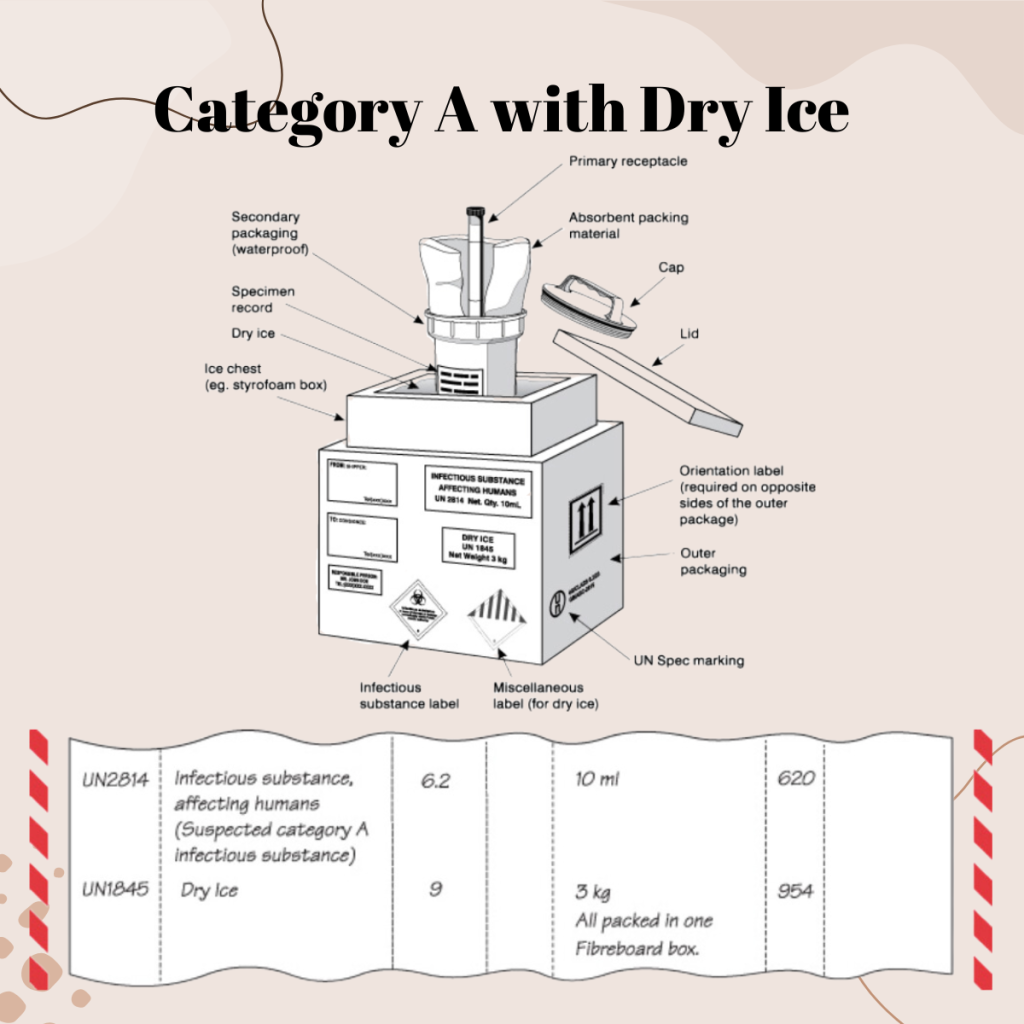
- Dry ice label (UN 1845) – if dry ice is used as coolant (requires additional markings and quantity shown)
📄 Documentation
Shipper’s Declaration for Dangerous Goods. Must include:
- UN number and proper shipping name
- Class, Packing Group (if applicable)
- Quantity and type of packaging
- Signature of the shipper
Transporting Category B Infectious Substances – Packaging, Labels & Forms
Category B infectious substances pose a lower risk and have slightly relaxed regulatory requirements compared to Category A, yet still demand proper packaging and handling under IATA DGR rules.
🧫 What is Category B?
Category B infectious substances are those not meeting the criteria for Category A, but still capable of causing disease. These are assigned:
UN 3373 – Biological Substance, Category B
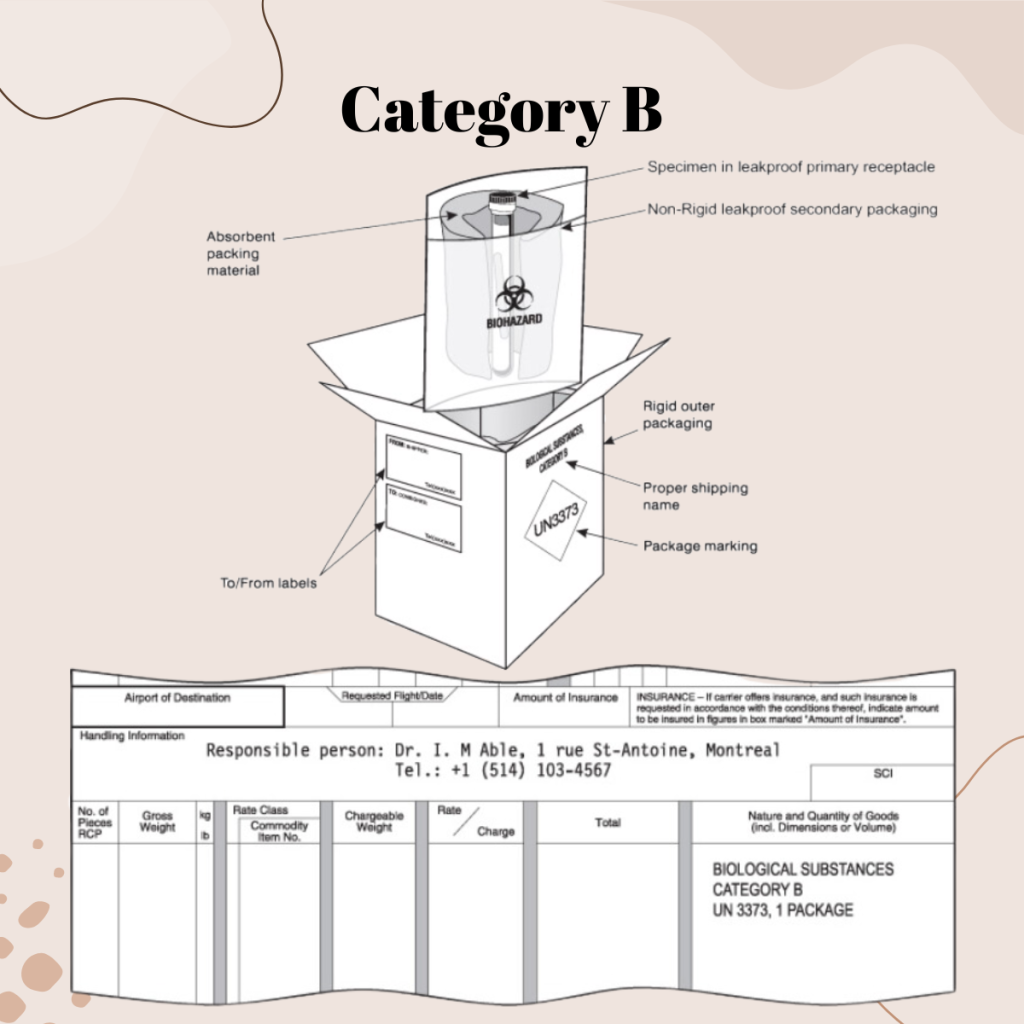
❗ Category B shipments are not subject to the full DGR, but must comply with Packing Instruction PI 650.
📦 Packaging Requirements (PI 650)
Triple packaging system is still mandatory:
- Primary receptacle – leakproof
- Secondary packaging – leakproof, with enough absorbent material
- Outer packaging – rigid, withstand 1.2 m drop test
No UN specification marking required on outer package for Category B (unlike Category A).
🏷️ Labels and Markings
UN 3373 diamond-shaped mark with the text:
“BIOLOGICAL SUBSTANCE, CATEGORY B”
- Name, address and telephone number of sender and receiver
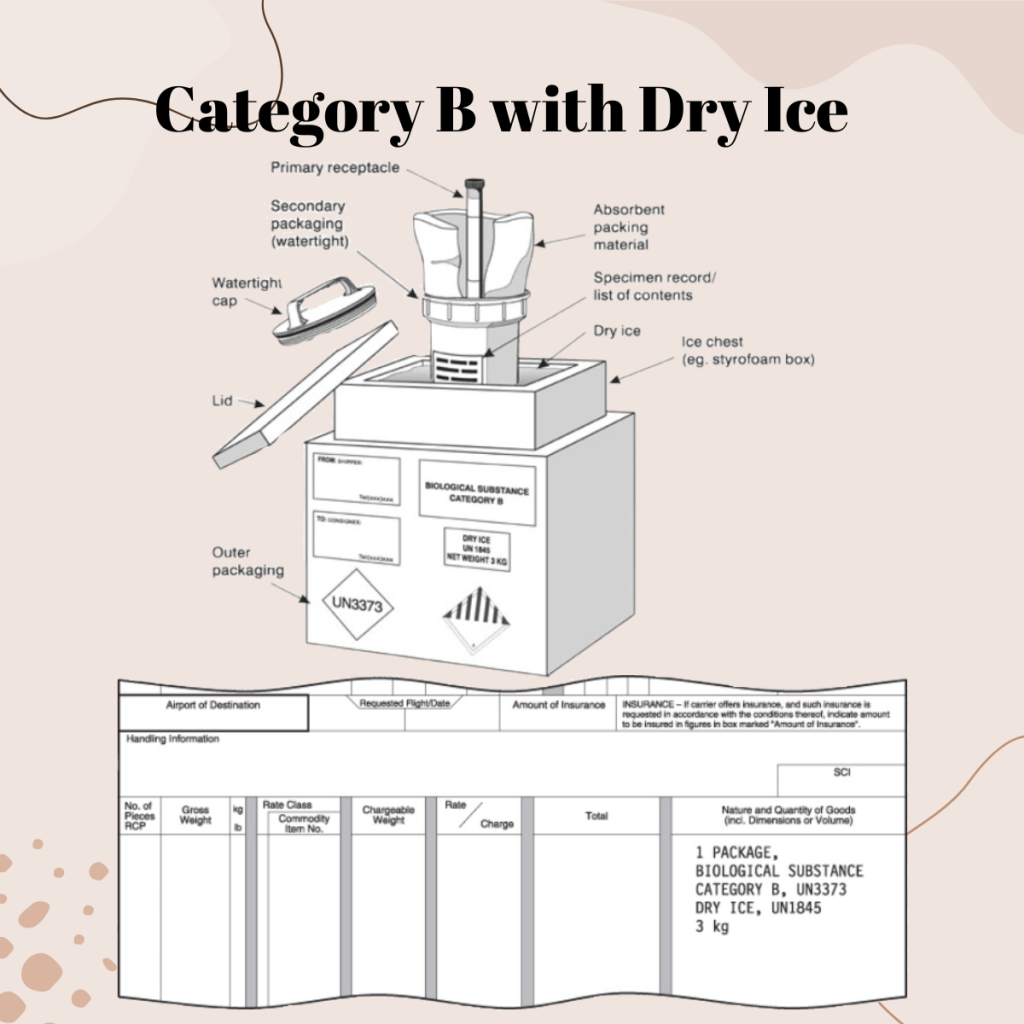
- If dry ice used:
- Mark with “UN 1845, CARBON DIOXIDE, SOLID”
- Include net weight of dry ice in kg
- Apply Class 9 label
📄 Documentation
- Shipper’s Declaration is NOT required for UN 3373.
- If Air Waybill is used:
“Nature and Quantity of Goods” box must show:
“UN 3373, BIOLOGICAL SUBSTANCE, CATEGORY B”
For transparency and emergency cases, contact details of a responsible person are recommended on the package or airwaybill (Ref: IATA DGR 5.0.2.11(c)).