

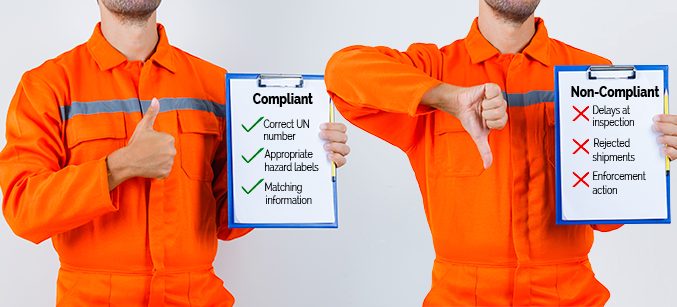
For businesses handling, storing, or transporting dangerous materials, maintaining hazardous goods compliance is a fundamental part of day-to-day operations. Whether you’re moving goods locally or across borders, failing to meet regulatory requirements can result in delays, fines, or serious safety risks.
Many organisations rely on a mix of internal processes and external guidance, but with evolving ADR regulations and increasing scrutiny across supply chains, staying compliant requires a proactive and informed approach.
From correct classification to staff training, the following practical tips outline how businesses can strengthen their compliance framework and reduce risk.
Understand Your Classification Responsibilities
Correct classification is the foundation of hazardous goods compliance.
Every substance or article must be:
- Accurately classified according to its hazard class
- Assigned the correct UN number
- Described using the proper shipping name
Misclassification is one of the most common compliance failures and can lead to incorrect packaging, labelling, and documentation.
Under ADR regulations, classification determines nearly every other requirement, meaning errors at this stage can affect the entire transport process. Ensuring staff understand classification principles, or seeking expert support where needed, is critical.
Ensure Packaging Meets Regulatory Standards
Packaging plays a key role in preventing incidents during transport.
To maintain hazardous goods compliance, businesses must ensure:
- Use of UN-approved packaging where required
- Packaging is suitable for the specific substance and hazard class
- Packages are tested and certified in line with regulatory standards
ADR regulations set out strict requirements for packaging performance, including resistance to impact, pressure, and environmental conditions.
Cutting corners on packaging or reusing non-compliant materials can significantly increase risk: both from a safety and compliance perspective.
Apply Correct Labelling and Marking
Clear and accurate labelling ensures that risks are communicated throughout the supply chain.
For full hazardous goods compliance, packages must display:
- Appropriate hazard labels
- Correct UN numbers
- Handling labels where required
- Any additional markings specific to the goods
One common issue is confusion between hazard and handling labels, or missing labels entirely when goods are consolidated or overpacked.
Under ADR regulations, labelling requirements are precise, including size, placement, and visibility, making attention to detail essential.
Maintain Accurate Documentation
Documentation is a key compliance checkpoint and is often where errors are identified.
To support hazardous goods compliance, businesses must ensure:
- Transport documents are complete and accurate
- Information matches classification and labelling
- Emergency contact and handling information is included where required
Incorrect or incomplete documentation can result in:
- Delays at inspection points
- Rejected shipments
- Potential enforcement action
As regulatory systems become more digital, the expectation for accuracy continues to increase.
Invest in Staff Training and Awareness
Even with the right processes in place, compliance ultimately depends on people.
DGSA training and Dangerous Goods Awareness training help ensure that:
- Staff understand their responsibilities
- Procedures are followed correctly
- Risks are identified and managed effectively
Training should be tailored to the role, whether that involves:
- Preparing consignments
- Handling goods in a warehouse
- Managing transport operations
Under ADR regulations, training is a requirement for anyone involved in the transport of dangerous goods.
Investing in DGSA training also ensures that organisations have access to qualified expertise for ongoing compliance oversight.
Appoint a DGSA Where Required
For many businesses, appointing a Dangerous Goods Safety Adviser (DGSA) is a legal requirement.
A DGSA is responsible for:
- Monitoring compliance with ADR regulations
- Advising on safe transport practices
- Preparing annual reports
- Investigating incidents
Having a qualified DGSA supports ongoing hazardous goods compliance and provides a structured approach to managing regulatory responsibilities.
For organisations without in-house expertise, external DGSA support or DGSA training can help meet these requirements effectively.
Regularly Review and Audit Your Processes
Compliance requires continuous review…
Businesses should:
- Conduct regular internal audits
- Review procedures against current ADR regulations
- Identify and address gaps in compliance
Auditing helps ensure that:
- Processes remain up to date
- Staff continue to follow correct procedures
- Changes in regulations are implemented effectively
This proactive approach reduces the risk of non-compliance and supports continuous improvement.
Stay Updated with Regulatory Changes
Dangerous goods regulations are updated regularly, and staying informed is essential.
Changes to ADR regulations can impact:
- Classification rules
- Packaging instructions
- Labelling requirements
- Documentation standards
Failing to keep up with these updates can quickly lead to compliance gaps.
Subscribing to industry updates, attending training, and working with experienced providers can help businesses stay aligned with current requirements and maintain hazardous goods compliance.
Build a Culture of Compliance
Beyond processes and procedures, successful hazardous goods compliance relies on organisational culture.
This includes:
- Encouraging attention to detail
- Promoting accountability across teams
- Prioritising safety alongside efficiency
When compliance is embedded into daily operations, businesses are better positioned to:
- Reduce risk
- Improve operational consistency
- Demonstrate regulatory responsibility
Book Your Training Today
Maintaining hazardous goods compliance requires the right knowledge, processes, and support.
Whether you are looking to strengthen internal expertise or ensure your team is aligned with current ADR regulations, investing in DGSA training is a practical step towards safer and more compliant operations.

