

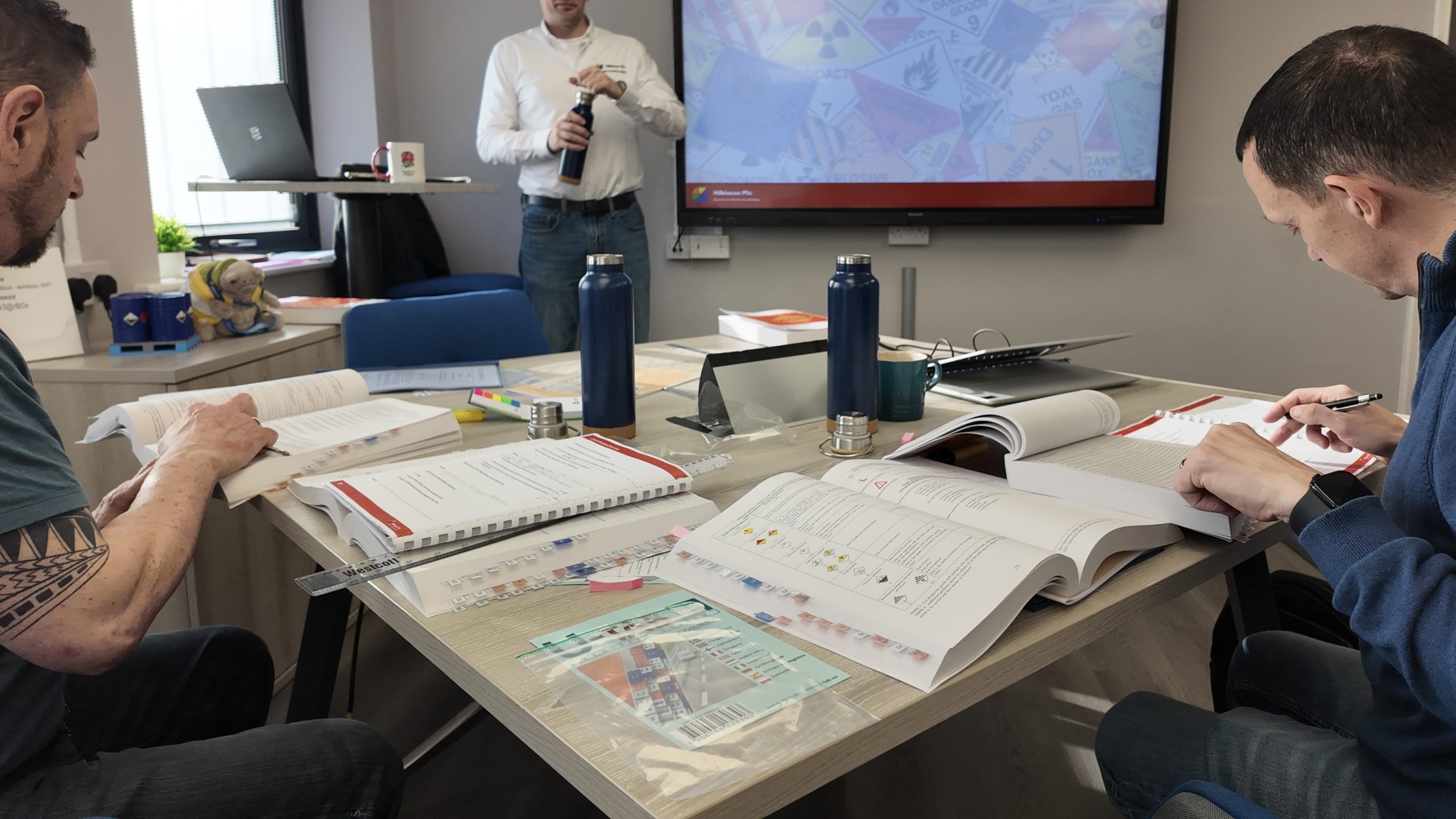
 Every organisation involved in the handling, storage, or transport of hazardous materials has a legal and operational responsibility to ensure its workforce is properly trained in Dangerous Goods Awareness. Dangerous goods are not limited to large-scale chemical manufacturers; many everyday business activities involve substances that fall under ADR or IMDG regulations.
Dangerous Goods Awareness Training is therefore a fundamental part of maintaining safe, compliant, and efficient operations.
Hibiscus delivers expert led Dangerous Goods Awareness Courses across Yorkshire, including Leeds, Sheffield, and Bradford. Our approach focuses on translating complex regulatory frameworks into clear, practical guidance that staff can confidently apply in real-world scenarios.
Whether your business operates in logistics, manufacturing, retail distribution, or chemical processing, ensuring your team has a solid understanding of Dangerous Goods Awareness and ADR Training requirements is essential for both compliance and safety.
Who Should Attend Dangerous Goods Courses?
Regulations such as ADR (road transport) and IMDG (sea transport) make it clear that anyone involved in the transport chain must receive appropriate Dangerous Goods Awareness Training.
This includes a wide range of roles across an organisation:
Drivers transporting dangerous goods –
Drivers are often the most visible part of dangerous goods operations, but their responsibilities go beyond simply moving goods from one location to another.
They are required to:
- Understand the nature of the goods being transported
- Verify transport documentation
- Ensure correct vehicle markings and equipment are in place
- Follow emergency procedures in the event of an incident
While ADR certified drivers receive specialist ADR Training, Dangerous Goods Awareness Courses provides essential foundational knowledge, particularly for those involved in occasional or lower-threshold dangerous goods movements.
Warehouse and logistics staff –
Warehouse operatives, loaders, and logistics coordinators play a critical role in ensuring compliance before goods even reach the vehicle.
Their responsibilities may include:
- Handling and storing hazardous goods safely
- Checking packaging and labelling compliance
- Preparing consignments for dispatch
- Segregating incompatible substances
Errors at this stage, such as incorrect labelling or improper packaging, can lead to serious compliance breaches and safety risks further down the supply chain.
Dangerous Goods Awareness Training ensures that warehouse and logistic teams understand:
- What they are handling
- Why compliance matters
- How their actions impact overall safety
New employees entering chemical or hazardous goods operations –
For new starters, dangerous goods regulations can appear complex and overwhelming. Without proper training, there is a risk of:
- Misinterpreting procedures
- Overlooking compliance requirements
- Relying on informal or incorrect practices
Our dangerous goods training provides a structured introduction to:
- Key regulatory frameworks
- Basic hazard identification
- Safe working practices
This helps new employees integrate more effectively into operations while maintaining compliance from the outset.
What the Course Covers
Hibiscus’ Dangerous Goods Awareness Courses provides a comprehensive overview of the regulatory and practical requirements associated with handling hazardous materials.
Our course is designed to be both informative and applicable, ensuring that participants leave with knowledge they can immediately use in their roles.
Introduction to ADR and IMDG regulations –
Understanding the regulatory framework is the foundation of dangerous goods compliance.
The training typically covers:
- The purpose and structure of ADR (road transport regulations)
- The role of the IMDG Code in sea transport
- How these frameworks apply to different types of operations
- Legal responsibilities of organisations and individuals
Rather than overwhelming participants with technical detail, our Dangerous Goods Awareness Training focuses on what the regulations mean in practice.
Classification, labelling, and packaging of hazardous goods –
Correct classification is essential for determining how dangerous goods should be handled packaged, and transported.
This section of the course includes:
- Overview of hazard classes (e.g. flammable liquids, corrosives, toxic substances)
- Understanding UN numbers and Proper Shipping Names
- Labelling and marking requirements
- The importance of using approved packaging
Participants learn how to identify hazards quickly and accurately, which is critical for maintaining compliance and ensuring safety throughout the supply chain.
Safety and emergency response procedures –
Dangerous goods present inherent risks, which must be managed through proper procedures and preparedness.
This Dangerous Goods Awareness and ADR Training provides:
- Risk awareness and hazard recognition
- Safe handling and storage practices
- Emergency response actions in the event of spills, leaks, or incidents
- Use of personal protective equipment (PPE)
This ensures that staff are not only aware of risks but are also equipped to respond effectively if something goes wrong.
Compliance documentation requirements –
Documentation is a key component of dangerous goods transport and is often a focus during inspections.
Participants are introduced to:
- Transport documentation requirements (e.g. UN number, Proper Shipping Name, hazard class)
- The purpose of documentation in emergency situations
- Common errors that lead to compliance issues
- The importance of accuracy and consistency
By understanding documentation requirements through Dangerous Goods Awareness Training, staff can help prevent delays, enforcement action, and potential penalties.
Benefits of Dangerous Goods Awareness Courses
Investing in Dangerous Goods Awareness Courses deliver measurable benefits across compliance, safety, and operational efficiency.
Staff confidence and competence –
One of the immediate benefits of training is increased confidence among employees.
When staff understand:
- What they are handling
- What is expected of them
- How to follow procedures correctly
They are more likely to:
- Work efficiently
- Make informed decisions
- Avoid errors
Confidence leads to competence, and competence leads to safer operations.
Regulatory compliance for ADR and IMDG –
Failure to comply with dangerous goods regulations can result in:
- Fines and enforcement action
- Shipment delays or refusals
- Reputational damage
Dangerous Goods Awareness Courses help organisations meet their legal obligations by ensuring that all relevant staff:
- Understand regulatory requirements
- Apply them consistently
- Recognise potential compliance risks
This is particularly important during audits and inspections, where staff may be asked to demonstrate their knowledge and understanding.
Reduced risk of incidents and penalties –
Many dangerous goods incidents can be traced back to human error or lack of awareness.
Examples include:
- Incorrect labelling
- Incompatible goods stored together
- Missing or inaccurate documentation
By addressing these risks through a Hazardous Materials Course and Dangerous Goods Awareness Training, organisations can:
- Reduce the likelihood of incidents
- Improve overall safety performance
- Minimise the risk of costly penalties
In high-risk environments, even small improvements in awareness can have a significant impact on outcomes.
Why Dangerous Goods Awareness Courses Matter More Than Ever
As regulations continue to evolve and supply chains become more complex, the importance of Dangerous Goods Awareness Courses only increases.
Modern operations often involve:
- Multiple transport modes (road, sea, air)
- International shipments
- A wide range of hazardous materials
This complexity makes it essential for all staff to have a baseline understanding of Dangerous Goods Awareness and ADR Training requirements.
In addition, increased regulatory scrutiny means that organisations must be able to demonstrate:
- That training has been provided
- That staff understand their responsibilities
- That procedures are being followed correctly
Dangerous Goods Awareness is therefore a key part of building a robust safety culture within an organisation.
Choosing the Right Training Provider in Yorkshire
When selecting a training provider, it is important to choose one that offers:
- Up-to-date knowledge of ADR and IMDG regulations
- Practical, real-world examples
- Clear and accessible delivery
- Experience across multiple industries
Hibiscus provides Dangerous Goods Awareness Courses tailored to the needs of businesses across Yorkshire, including Leeds, Sheffield, and Bradford. Participants have the option to choose either online or in-person training for this particular course.
Our training is designed to:
- Simplify complex regulations
- Focus on practical application
- Support long-term compliance
BOOK YOUR SPOT FOR THE DANGEROUS GOODS AWARENESS COURSE NOW!
Ensure your staff are fully prepared and confident. Book your Dangerous Goods Awareness Course in Yorkshire today.

