There are some areas of Dangerous Goods that are worth revisiting no matter how experienced you are, and Class 8 corrosives are certainly one of them.
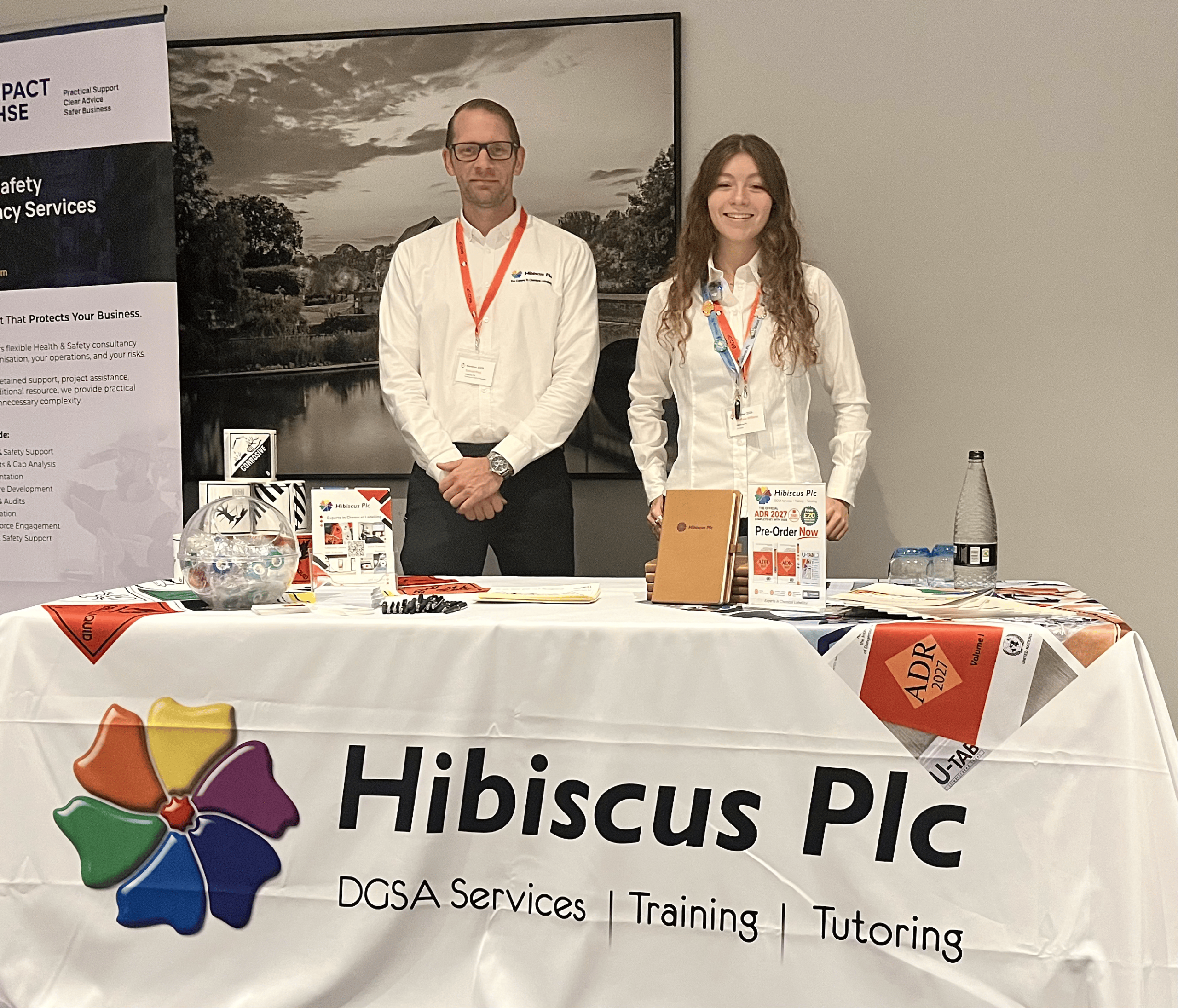
Two members of the Hibiscus team, Svetlana and Samuel, recently headed to the beautiful Stratford Manor for the BADGP Corrosives Seminar. The event brought Dangerous Goods professionals together for a closer look at Class 8 corrosive substances, their classification, associated risks and some of the challenges they can present.
And, as you might expect from a room full of Dangerous Goods professionals, there was plenty to talk about.
Getting to Grips with Class 8 Corrosives
Class 8 dangerous goods present some very specific risks. Corrosive substances can cause severe damage to living tissue and can also present risks to other goods, equipment and materials if something goes wrong during handling or transport.
That makes recognising and correctly classifying Class 8 corrosives particularly important.
It is not simply a case of spotting the Class 8 hazard label and considering the job done. Understanding the properties of the substance, how it needs to be handled and what could happen if incompatible materials come into contact are all important parts of managing corrosive Dangerous Goods safely.
This was reflected throughout the seminar, which explored the subject from different angles, including the classification of corrosive substances and real-world spillage scenarios.
These practical discussions are particularly valuable because they take Dangerous Goods Awareness beyond simply knowing what the regulations say. They encourage people to think about how those requirements apply when something unexpected actually happens.
Why Dangerous Goods Awareness Matters
Class 8 is a good reminder of why Dangerous Goods Awareness cannot stop at recognising a hazard label.
Acids, alkalis and other corrosive substances can behave differently and incompatibility can create additional risks. Understanding what you are dealing with, and why certain substances need to be kept apart, is an important part of working safely with Class 8 Dangerous Goods.
For anyone involved in the Dangerous Goods supply chain, that knowledge matters. Classification, packaging, labelling, documentation, handling and emergency response all rely on understanding the hazard in the first place.
It is also why ongoing Dangerous Goods training remains so important. Regulations, responsibilities and working practices develop over time, so maintaining knowledge should not be viewed as something that ends once initial training has been completed.
Events such as the BADGP Corrosives Seminar give professionals another opportunity to refresh that knowledge, ask questions and hear how other people are approaching similar challenges within their own businesses.
Hearing from Dangerous Goods Professionals
For Svetlana and Sam, one of the best parts of the day was having the opportunity to speak with other people working across the sector.
Alongside enjoying the surroundings at Stratford Manor, they spent time chatting with delegates and conducting a series of short interviews to find out what had brought them to the seminar, what they hoped to take away from the day and why they felt events like this remain important.
Those conversations gave us a wider perspective than simply reporting back on the presentations.
People attend Dangerous Goods seminars for different reasons. Some are looking to refresh their existing knowledge, others want clarification around a particular subject and some simply value having the opportunity to hear how other professionals deal with the same challenges they encounter in their own roles.
That exchange of experience is a big part of what makes face-to-face industry events so useful.
Bringing Class 8 Knowledge into the Real World
The technical content is obviously important, but seminars like this also create room for conversations that might not otherwise happen.
Being able to ask a question, compare experiences or discuss a particular Class 8 corrosive issue with someone from another part of the Dangerous Goods sector can turn a regulatory or theoretical point into something much more useful.
For our Hibiscus team who attended, it was a fantastic day at Stratford Manor: plenty of useful technical discussion, some great conversations and a chance to hear directly from the people working with Dangerous Goods about what they value from events like this.
Ultimately, staying aware of the risks surrounding Class 8 is not about making corrosive substances sound frightening. It is about understanding them properly and making sure the people responsible for handling, preparing or transporting them have the knowledge to do so safely.
And sometimes, getting a room full of Dangerous Goods professionals together to talk about acids, alkalis, classification and spills is exactly the way to do it.
Keep Your Dangerous Goods Knowledge Up to Date
Events like the BADGP Corrosives Seminar are a useful reminder that Dangerous Goods compliance relies on people having the right knowledge, not simply having procedures written down.
At Hibiscus, our Dangerous Goods training is designed to help businesses and individuals build that understanding, from Dangerous Goods Awareness training through to more specialist DGSA and professional training.
Whether you need to refresh knowledge across your team, improve general Dangerous Goods Awareness or develop more specialist expertise, keeping people trained is an important part of maintaining safe and compliant operations.
Alternatively, contact our Training Manager for more information on our training courses: training@hibiscus-plc.com
Written by:-
-
View all posts
Marketing Manager at Hibiscus Plc, with a background in pre-press and chemical label legislation. Writes about industry trends, legislation, and company news.
