Would Your Business Benefit from ADR Driver Training?


ADR Driver Training and why you should consider ADR Training for your Business

ADR is the European agreement governing the international carriage of dangerous goods by road. In the UK, drivers carrying dangerous goods in circumstances where the ADR driver requirements apply need the appropriate qualification. 

What Is ADR Driver Training?

ADR driver training is designed for professional drivers who transport dangerous goods by road. Training includes a core module alongside additional modules depending on the qualification required, such as Class 1, Class 7 or other specialist areas.

For businesses moving dangerous goods by road, ensuring drivers have the appropriate training is therefore an important part of maintaining compliance.

Who is ADR Driver Training useful for?

ADR Driver Training is primarily intended for drivers who transport dangerous goods by road where the full requirements of ADR apply. In Great Britain, ADR is given legal effect principally through the Carriage of Dangerous Goods and Use of Transportable Pressure Equipment Regulations 2009 (CDG 2009).The CDG Regulations create the legal framework inUK,while ADRcontainsthe detailed technical requirements.

This means ADR Driver Training is particularly relevant for:

  • HGV and LGV drivers transporting dangerous goods, including chemicals, fuels, gases, corrosives, toxicsubstances and other regulated materials.
  • Tanker drivers, whereadditional tank-specialisation training may be required depending on the type and capacity of the tanks being carried.
  • Drivers carrying packaged dangerous goods above the ADR 1.1.3.6 threshold, where the small-load exemption can no longer be appliedan ADR competent driver is
  • Van and delivery drivers, not just traditional HGV drivers. The requirement is driven principally by the dangerous goods,quantity and method of carriage rather than simply the size of the vehicle.
  • Drivers working within chemical manufacturing, fuel distribution, industrial gases, hazardous waste,logisticsand specialist distribution, where dangerous goods routinely form part of the load.

Drivers who needadditionalspecialist qualifications forparticular dangerousgoodscan haveadditionalclass modules and examinations added to an ADR card whererequired.

The Benefits of ADR Driver Training

Transporting dangerous goods by road places significant responsibilities on both the carrier and the vehicle crew. Effective ADR driver training is therefore about much more than obtaining an ADR Driver Training Certificate, it provides drivers with the knowledge and practical understanding needed to transport dangerous goods safely and in accordance with the regulations.

1. Helps Drivers Understand Their Responsibilities

ADRChapter 8.2sets out the requirements for the training of vehicle crews. Drivers carrying dangerous goods above the applicable exemptions aregenerally requiredto hold an ADR Driver Training Certificateappropriate tothe classes of dangerous goods and type of carriage involved.

The purpose of the training is not simply to prepare drivers to pass an examination.ADR 8.2.2requires drivers to receive the knowledge and skills necessary for the safe carriage of dangerous goods.

The basic training syllabus under ADR 8.2.2.3.2 includes subjects such as:

  • the general requirements governing the carriage of dangerous goods;
  • the main types of hazards;
  • preventative and safety measures appropriate to those hazards;
  • action to be taken following an accident or emergency;
  • dangerous goods marking and labelling;
  • vehicle and operational requirements;
  • loading,unloading and handling precautions; and
  • restrictions concerning mixed loading.

This gives drivers a much broader understanding of how dangerous goods requirements apply to the journey they are undertaking.

Effective training therefore helps a driver recognise when something does not appear correct before the vehicle begins its journey.

2. Supports Safer Dangerous Goods Transport

Drivers are one of the final safeguards in the dangerous goods transport chain.

Although classification, packaging and preparation responsibilities may sit with other participants in the supply chain, the driver and carrier still have important operational responsibilities once the goods are presented for carriage.

ADR Part 8containsrequirements covering areas including:

ADR 8.1.2 – Documentation
Relevant transport documents and Instructions in Writing must be available on the transport unit.

ADR 8.1.3 – Placarding and marking
This links the vehicle requirements to the marking and placarding provisions ofADR Chapter 5.3.

ADR 8.1.4 – Fire-fighting equipment
Transport units must carry theappropriate fireextinguishing equipment.

ADR 8.1.5 – Miscellaneous and personal protective equipment
This can include wheel chocks, warning signs, high-visibility clothing, portablelightingandadditionalequipment depending upon the hazards being carried.

ADR 8.3 – Operational requirements
Thisestablishesa number ofrequirements and precautions applying to vehicle crews during dangerous goods transport.

Drivers must also be familiar with theInstructions in Writing under ADR 5.4.3, which describe the actions to be taken by the vehicle crewin the event ofan accident or emergency. The carrier must ensure that theinstructions are provided in a language each crew member can read and understand.

Good ADR training therefore gives drivers the confidence to recognise potential problems and, importantly, to question a load where the documentation, marking, placarding,equipmentor condition of the goods does not appear correct.

That provides anadditionallayer of protection before a compliance issue develops into an incident.

3. Helps Businesses Meet Their Legal Obligations

For operations in Great Britain, ADR is given legal effect through theCarriage of Dangerous Goods and Use of Transportable Pressure Equipment Regulations 2009 (CDG 2009).

Regulation 5 of CDG 2009provides the principal basis for applying ADR requirements to the carriage of dangerous goods by road in Great Britain.

Where the ADR driver training provisions apply, businesses should therefore ensure that drivers hold theappropriateand valid ADR Driver Training Certificate for the dangerous goods and type of carriage concerned.

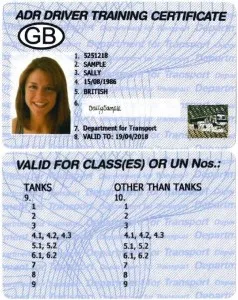
Drivers becoming qualified to carry dangerous goods must undertake the required training and pass the relevant examinations to obtain an ADR card. The qualification is normally valid forfive years, after which refresher training and examinations arerequiredto remain qualified.

Inthe UK, dangerous goods driver training must follow a programme approved by theDriver and Vehicle Standards Agency (DVSA), and organisations delivering ADR driver training mustoperateas approved training centres.

It is therefore important that businesses selectan appropriate approvedADR training provider and ensure that the training undertaken reflects the activities their drivers willactually perform.

4. Training Is Still Important Where an ADR Certificate Is Not Required

Not every driver carrying dangerous goodsis required tohold a full ADR Driver Training Certificate.

For example, certain carriage below theADR 1.1.3.6 small-load thresholdsmaybenefitfrom exemptions from the full driver-training certificate requirements.

However, this does not necessarily mean that no dangerous goods training is required.

Drivers operating under these provisions may still require training in accordance with ADR Chapter 1.3, including:

  • general awareness training;
  • function-specific training; and
  • safety trainingappropriate to their responsibilities.

ADR 1.3.3 also requires records of this training to be retained. HSE guidance specifically confirms that drivers carrying packaged dangerous goods below the small-load threshold remain subject to the relevant Chapter 1.3 training requirements.

This distinction is important: being exempt from holding an ADR Driver Training Certificate does not automatically mean being exempt from dangerous goods training altogether. 

More Than Just an ADR Card

Ultimately, the value of ADR driver training should not be measured solely by whether a driver passes an examination.

Good training should produce a driver who understands:

  • What they are carrying
  • What needs to be checked
  • What the vehicle requires
  • What documentation should be present
  • What precautions need to be taken, and
  • What to do when something does not look right.

ADR Card License from ADR Driver Training

That knowledge supports the wider dangerous goods compliance system and gives businesses another competent pair of eyes at one of the most important stages of the transport process.

ADR training provides the qualification. Effective ADR training develops competence. 

If this sounds like something your business needs, register your interest HERE by filling out our form.

Alternatively, contact Samuel Pass for more training information: training@hibiscus-plc.com 

Written by:-

  • Dangerous Goods Safety Advisor with 15+ years’ experience across road, sea, and air transport. Certified ISO 9001 Lead Auditor with additional expertise in Radiation Protection Supervision and live animal transport compliance.

    View all posts